
QUICK TAKEAWAYS
Sidewalk trip and fall cases are complicated because ownership is not always obvious.
The city, county, adjacent business, property owner, or a maintenance company may be responsible.
Photos of the defect are critical, because sidewalks get repaired quickly.
Government claims have strict notice deadlines—sometimes only months.
You do not pay medical bills upfront; most are handled on a lien or through insurance.
An Personal Injury Lawyer From Edvin Law is essential for identifying the responsible party and protecting evidence.
Trip and Fall on a Sidewalk: Who Is Responsible, What To Do, and How To Get Compensated
Sidewalks are intended to provide safe paths for pedestrians. But when they are cracked, uneven, broken, or raised by tree roots, they can become dangerous. Trip and fall accidents on sidewalks are extremely common, and they often lead to serious injuries—fractures, torn ligaments, knee injuries, wrist fractures, concussions, and back or neck injuries.
Despite how common these accidents are, most people have no idea who is responsible, what evidence is needed, or how to make a claim. This guide explains exactly what to do, how liability works, and what steps to take to protect your case in Nevada, California, or Arizona.
What To Do Immediately After a Trip and Fall on a Sidewalk
Taking the right steps immediately after the fall can make or break your case.
A. Check your injuries
Even if you think the injury is “minor,” many trip and fall injuries worsen over the next 24–48 hours.
B. Take photos immediately
Sidewalk hazards disappear fast—sometimes overnight. Photos are your most valuable evidence.
Take pictures of:
The exact defect that caused your fall
Cracks, holes, raised sections, uneven transitions
Tree roots pushing the sidewalk upward
Missing bricks, broken tiles, loose pavers
Poor lighting or lack of warning signs
Your injuries and torn clothing
Water, debris, or hazards that contributed
If you cannot take photos due to injury, ask a friend or nearby person to help.
C. Get witness information of Trip and Fall
Witnesses can confirm what happened and support your case.
D. Report the incident
Depending on the location, report it to:
City or county public works department
Adjacent business
Homeowner or property manager
Security or commercial complex management
If it occurs on private property, ask for an incident report.
E. Seek medical treatment
Medical documentation is essential. If you wait days to seek care, the insurance company will argue you were not seriously injured.
Who Is Responsible for a Sidewalk Trip and Fall?
Sidewalk ownership varies. That makes these cases more complex than indoor falls.
A. City or County Government
In many locations, the city or county is responsible for maintaining sidewalks. If the defect existed for a long time or they failed to inspect or repair it, they may be liable.
B. Adjacent property owners
In some states and municipalities, the property owner next to the sidewalk is legally responsible for keeping it safe. This includes:
Homes
Apartment complexes
Businesses
Hotels
Shopping centers
Their duties may include repairs, inspections, lighting, and preventing hazardous conditions.
C. Construction or utility companies
If a contractor recently worked on the area—plumbing, electrical, concrete, fiber optics—they may be responsible for creating a dangerous condition.
D. Landscaping companies
Tree roots are a major source of sidewalk problems. If a landscaping company failed to maintain trees or ignored root damage, they may be responsible.
Important:
Government claims have strict deadlines. Some cities require written notice within:
60–180 days
Much shorter than the typical 1–2 year personal injury statute of limitations
This is why contacting an attorney early is critical.
Common Causes of Sidewalk Trip and Fall Accidents
Most sidewalk falls occur due to:
Raised concrete slabs
Cracked pavement
Tree roots lifting concrete
Holes or missing chunks of sidewalk
Uneven transitions between slabs
Loose bricks or pavers
Slippery or poorly lit conditions
Erosion or water runoff
Construction defects
Neglected maintenance
To win your claim, you must prove the sidewalk was unreasonably dangerous.
How To Prove Liability in a Sidewalk Trip and Fall Case
Sidewalk cases require strong evidence because governments and businesses often deny responsibility.
A. Prove the sidewalk was hazardous
Photos, measurements, and expert evaluations help show the defect was dangerous.
B. Prove they knew or should have known
Examples of evidence:
Prior complaints
City or property maintenance logs
Other falls at the same location
Records of nearby repairs
Witness statements
Surveillance footage
C. Prove the fall caused your injuries
Medical records connecting the injury to the fall are essential.
D. Prove your damages in Trip and Fall
This includes:
Medical bills
Future medical care
Lost wages
Pain and suffering
Long-term disability
Permanent impairment
Sidewalk cases are more complex than normal slip-and-fall claims due to evidentiary and government requirements.
Do You Need To Pay Medical Bills Before Settlement?
Generally no.
Most accident-related medical bills can be handled through:
Health insurance
Med-pay coverage
Lien-based treatment
Deferred billing until the case settles
Your attorney ensures your treatment continues without upfront costs.
Should You Handle a Sidewalk Trip and Fall Claim Without an Attorney?
You can, but it’s rarely a good idea.
Sidewalk claims involve:
Strict government deadlines
Difficult liability issues
Multiple potential responsible parties
Evidence that disappears quickly
Insurance companies who blame the victim
Low settlement offers without representation
An attorney identifies the responsible entity, secures evidence fast, and protects you from legal traps.
When You Should Call an Attorney for Trip and Fall Cases
You should contact a lawyer if:
The sidewalk was uneven, cracked, or broken
You suffered injuries
The city or property owner denies responsibility
You don’t know who owns the sidewalk
You have medical bills
You missed work
The insurer is delaying or ignoring you
The defect was repaired after your fall
Trip and fall cases require fast action—especially when government entities are involved.
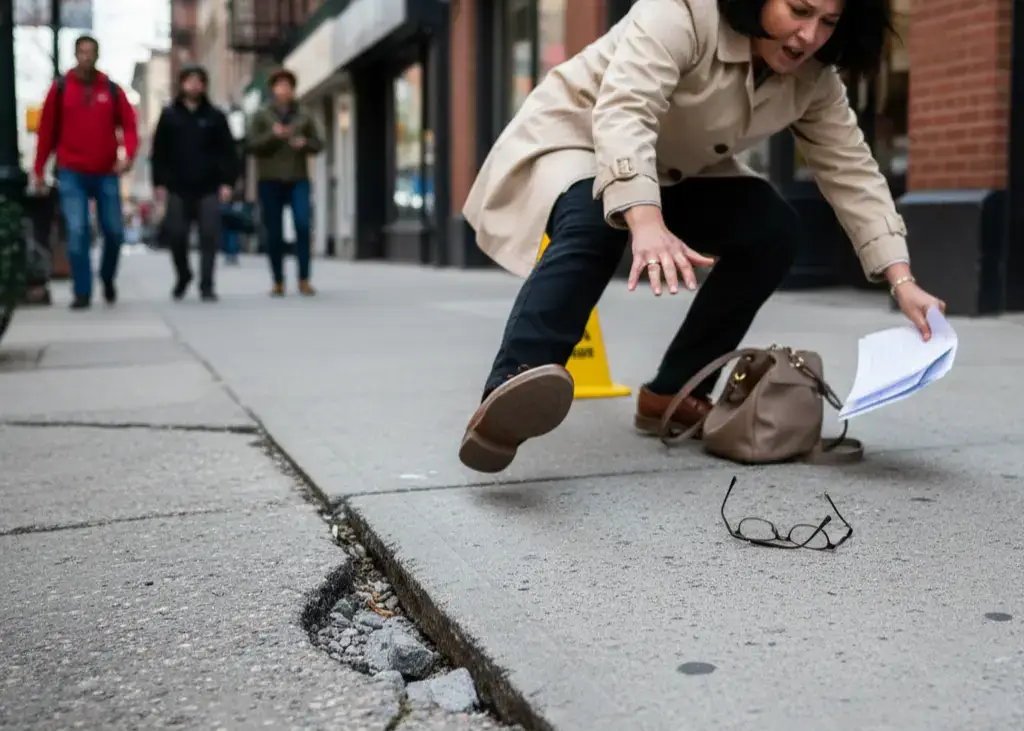
Cracked and uneven sidewalk causing a pedestrian trip and fall injury.
Contact Attorney Edvin Jones for Sidewalk Trip and Fall Cases
Sidewalk trip and fall cases involve unique challenges because responsibility varies and evidence disappears quickly. Cities, counties, businesses, and contractors may all be liable depending on the location. Taking photos, identifying the hazard, getting medical treatment, and contacting an attorney early is the best way to protect your claim. Compensation can cover medical bills, lost wages, and pain and suffering.
If you were injured on a sidewalk in Nevada, California, or Arizona, you don’t have to fight the city, county, or property owner on your own.
Contact:
Edvin Jones, Personal Injury Attorney
📧 info@edvin.law
🌐 edvin.law
📞 702-337-3430
I will investigate the site, identify the responsible party, gather evidence, manage your medical treatment, and build a strong case so you can focus on recovering.
FREQUENTLY ASKED QUESTIONS
1. Can I sue the city for a sidewalk injury?
Yes, but government claims have strict deadlines, so act quickly.
2. What if the sidewalk was repaired right after my fall?
This often indicates the defect was known. Your photos are crucial.
3. Can I still file a claim if no one witnessed the fall?
Yes. Photos, medical records, and your testimony can prove the case.
4. What if I wasn’t badly injured at first?
Injuries from falls often worsen over days. Seek medical care immediately.
5. What if I tripped while distracted?
You may still recover damages. The law compares your responsibility and the property owner’s negligence.