By Edvin Jones, Attorney at Law | Edvin Jones Injury Law | slip and fall attorney
Quick Takeaways
- Property owners and businesses generally must take reasonable steps to keep their premises safe for lawful visitors.
- A slip and fall claim usually requires evidence of a dangerous condition, the property owner’s actual or constructive notice, and a connection between the hazard and the injury.
- Casinos, hotels, and stores may have surveillance footage and incident records that could be important evidence.
- Comparative fault rules differ between Nevada, Arizona, and California and can affect the amount of compensation available.
- Personal injury claims generally have a two-year filing deadline in all three states, but claims involving government entities may have much shorter notice requirements, making it important to consult a slip and fall attorney promptly.
- Report the incident, photograph the hazard, identify witnesses, preserve relevant belongings, and seek medical attention.
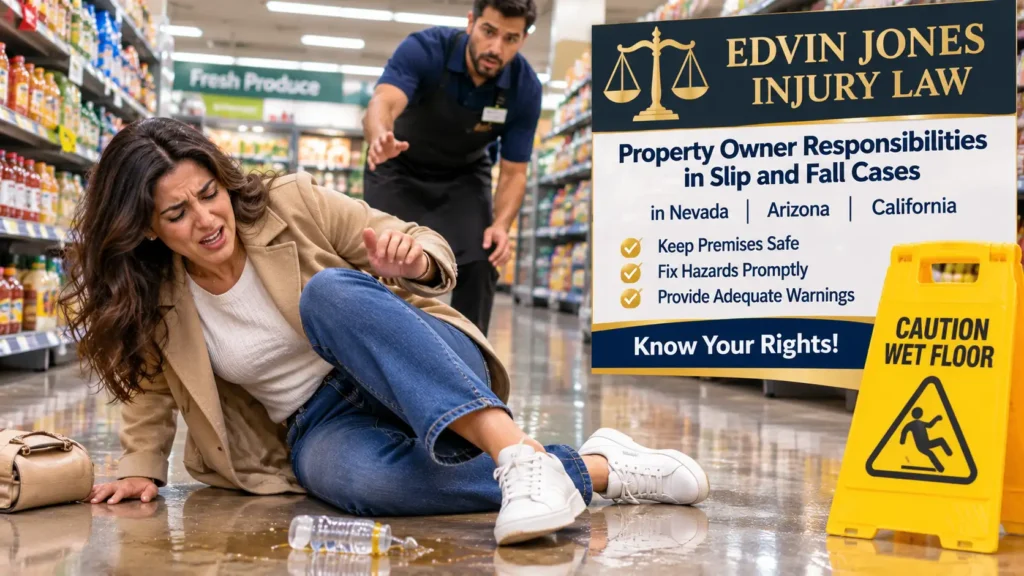
From the casino floors of the Las Vegas Strip to resort pools in Scottsdale and grocery stores in Los Angeles, businesses generally have a legal duty to take reasonable steps to keep their property safe for visitors. When a business fails to address a dangerous condition—such as an unmarked wet floor, a broken stair, or inadequate lighting—and someone gets hurt, the injured person may have a premises liability claim.
Slip and fall accidents can happen almost anywhere: casinos, hotels, restaurants, shopping centers, grocery stores, and other commercial properties. Understanding what you must prove and what steps to take after a fall can help protect your legal rights.
What You Have to Prove in a Slip and Fall Claim
A fall on someone else’s property does not automatically make the property owner legally responsible. Generally, an injured person must establish several elements:
- Duty of care: The property owner or business owed you a duty to use reasonable care under the circumstances. Your legal status on the property and the nature of the visit may affect the duty owed.
- Dangerous condition: A hazardous condition existed, such as a spill, uneven flooring, a broken handrail, or poor lighting.
- Notice of the hazard: The owner or business knew about the dangerous condition or reasonably should have discovered it through appropriate inspections.
- Failure to act reasonably: The owner or business failed to correct the hazard, provide an adequate warning, or otherwise take reasonable precautions.
- Causation and damages: The dangerous condition caused your injury, resulting in actual damages such as medical expenses, lost income, or pain and suffering.
Evidence is often critical. Photos, surveillance footage, maintenance records, inspection logs, witness statements, and incident reports may help establish what happened and whether the business had notice of the hazard.
Casinos and Hotels: A Las Vegas Specialty
Casinos and large hotels present particular challenges in slip and fall cases. Their properties can include gaming floors, restaurants, elevators, stairways, pools, parking garages, and extensive public walkways.
Surveillance footage may capture the accident, the condition that caused it, or how long the hazard existed before the fall. However, video retention policies vary, and footage may not be preserved indefinitely.
If you fall at a casino or hotel:
- Notify management or security as soon as reasonably possible.
- Request that the incident be documented in writing.
- Ask the property to preserve relevant surveillance footage.
- Take photographs of the hazard and surrounding area.
- Record the time, location, and names of employees or witnesses.
- Keep copies of any incident report or communications.
Do not assume that an incident report proves fault or that the business will automatically preserve all relevant evidence. Taking prompt steps to document the accident can help protect important information.
How Nevada, Arizona, and California Differ
Although Nevada, Arizona, and California all recognize premises liability claims, their laws differ in important ways.
Comparative Fault Rules
A property owner or insurer may argue that the injured person contributed to the accident—for example, by not paying attention or by ignoring a warning sign. How that argument affects compensation depends on the state.
- Nevada: Nevada follows a modified comparative negligence rule under NRS 41.141. An injured person may generally recover damages if their negligence is not greater than the negligence of the defendant or defendants combined. If the injured person’s share of fault is greater, recovery is barred. If the injured person is found 50% at fault, they may still recover, but their damages are reduced by that percentage.
- Arizona: Arizona follows a pure comparative negligence system under A.R.S. § 12-2505. An injured person’s damages are generally reduced by their percentage of fault, but their recovery is not automatically barred because they were mostly at fault.
- California: California also follows pure comparative negligence. Compensation is generally reduced according to the injured person’s share of responsibility.
Filing Deadlines
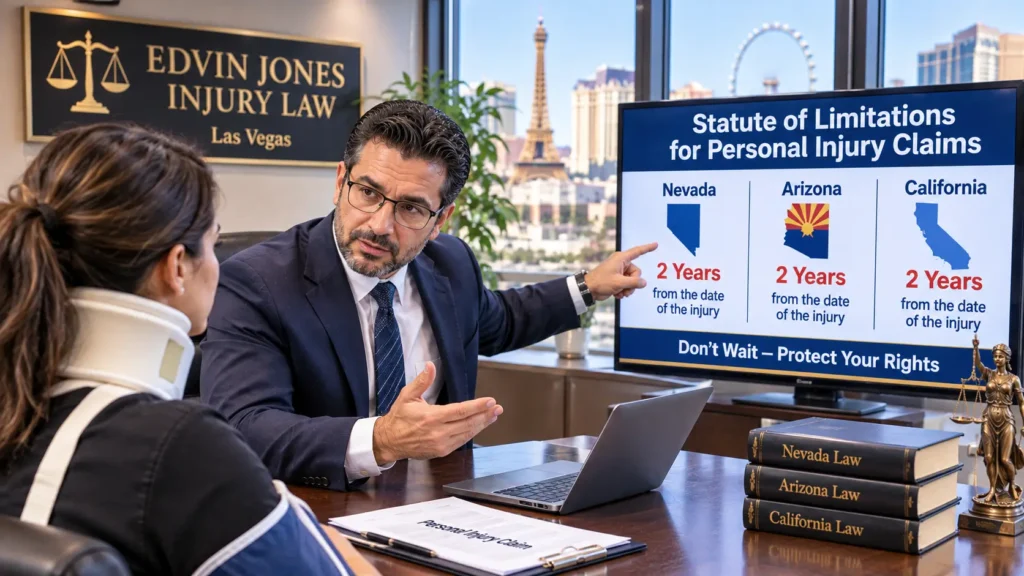
The general statute of limitations for many personal injury claims, including slip and fall cases, is two years in each state:
- Nevada: NRS 11.190
- Arizona: A.R.S. § 12-542
- California: California Code of Civil Procedure § 335.1
However, claims involving government-owned property or public entities can have much shorter notice requirements and special procedures. The applicable deadline depends on the jurisdiction and the facts of the claim. Do not assume that the ordinary two-year deadline applies to every case.
Open and Obvious Hazards
A business or property owner may argue that a hazard was open and obvious—for example, that a spill or uneven surface should have been visible to a reasonable visitor.
The visibility of a hazard can be relevant to questions of responsibility and comparative fault, but it does not automatically defeat every premises liability claim. The circumstances, applicable state law, and evidence all matter.
What to Do After a Slip and Fall
The steps you take after an accident may help preserve evidence and protect your health.
- Report the fall. Notify a manager, security officer, or property representative. Ask for the incident to be documented and request a copy if available.
- Photograph the hazard. Take pictures of the wet floor, spill, broken step, uneven surface, poor lighting, or other condition that caused the fall. Include photographs of the surrounding area and any warning signs.
- Identify witnesses. Get the names and contact information of people who saw the accident or noticed the hazard beforehand.
- Preserve your belongings. Keep the shoes and clothing you were wearing. Avoid cleaning, repairing, or discarding items that may help document what happened.
- Seek medical attention. Some injuries may not be immediately obvious. A medical evaluation can help identify injuries and create a record of your condition.
- Keep relevant records. Save medical bills, receipts, photographs, incident reports, and communications with the business or insurance company.
- Be careful with insurance communications. Avoid guessing about what happened or minimizing your injuries. Consider getting legal advice before signing a release or accepting a settlement.
How Edvin Jones Injury Law Can Help
A slip and fall claim may involve questions about property inspections, employee knowledge, surveillance footage, maintenance procedures, medical evidence, and comparative fault.
Edvin Jones Injury Law handles slip and fall and premises liability claims involving casinos, hotels, stores, and other properties across Nevada, Arizona, and California.
If you were injured because of a potentially unsafe property condition, contact our office to discuss your situation and understand your options.
Call 702-337-3430 for a free consultation. No win, no fee, subject to the terms of the representation agreement.
Contact Us
Edvin Jones Injury Law | Edvin Jones, Attorney at Law
Contact Edvin Jones Injury Law — Free Consultation
No Win, No Fee. We Speak English, Farsi, Turkish, Russian & Arabic.
Address:
Phone: 702-337-3430
Website: edvin.law
Instagram: edvinjonesinjurylaw | TikTok: edvin.law
Licensed in Nevada | Arizona | California
Disclaimer: This article is for informational purposes only and does not constitute legal advice. Reading this article does not create an attorney-client relationship.
FAQ
1. Can I sue a casino if I slip and fall in Las Vegas?
Potentially. A casino may be legally responsible if a dangerous condition caused your injury and the casino knew or reasonably should have known about the hazard but failed to take reasonable steps to fix it or warn visitors. The outcome depends on the evidence and applicable law.
2. What evidence do I need for a slip and fall claim?
Useful evidence may include photographs of the hazard, surveillance footage, incident reports, witness contact information, maintenance or inspection records, medical records, and documentation of your financial losses.
3. How long do I have to file a slip and fall lawsuit?
Many personal injury claims have a general two-year filing deadline in Nevada, Arizona, and California. Claims involving government entities may have much shorter notice deadlines and special requirements. Speak with an attorney promptly to identify the deadline that applies.
4. Can I still recover compensation if I was partly at fault?
Possibly. Nevada applies modified comparative negligence, which can bar recovery if your share of fault is greater than the defendant’s combined share. Arizona and California generally reduce compensation according to your percentage of fault without automatically barring recovery.
5. What if the business says the hazard was obvious?
An open and obvious hazard may be relevant to the legal analysis, but it does not automatically eliminate a claim. The circumstances, the business’s conduct, and the applicable state’s law all matter.
6. Should I report a fall even if I feel fine?
Yes. Reporting the incident helps create a record of when and where it happened. Some injuries may become noticeable later, so consider seeking medical attention if symptoms develop or you have concerns.
7. What if the fall happened at a public building or government property?
Special rules may apply, including shorter notice deadlines and additional procedural requirements. These deadlines can be significantly shorter than the ordinary personal injury statute of limitations, so seek legal advice as soon as possible.