By Edvin Jones, Esq. | Edvin Jones Injury Law | Las Vegas Nursing Home Neglect Lawyer
Quick Takeaways
- Nursing home neglect may involve dehydration, malnutrition, pressure ulcers, medication errors, falls, poor hygiene, delayed medical care, or inadequate supervision.
- If you suspect neglect, preserve evidence immediately by taking photographs, requesting medical records, saving facility documents, and documenting conversations with staff.
- Nevada law allows older and vulnerable adults who suffer harm from abuse or neglect to pursue civil claims for compensation under certain circumstances.
- Evidence such as care plans, staffing records, incident reports, wound-care documentation, and surveillance footage can be critical to proving neglect.
- An experienced Las Vegas nursing home neglect lawyer can investigate the facility, preserve evidence, identify liable parties, and pursue compensation for your loved one’s injuries.
Las Vegas Nursing Home Neglect Lawyer: Warning Signs, Evidence, and Nevada Elder Abuse Claims
Few calls are harder than the one from a family member who says, “Something is wrong at the facility.” A parent has unexplained bruises. A spouse has pressure sores. A grandparent is dehydrated, overmedicated, frightened, or suddenly withdrawn. Families are often told it is normal aging. Sometimes it is not.
Nursing home neglect cases require urgency, compassion, and precision. The resident may not be able to explain what happened. Records may be incomplete. Staff may change shifts. Facility management may minimize the issue. Edvin Jones Law Firm treats these cases as evidence cases first, because protecting the resident and proving the truth often happen at the same time.
What Counts as Nursing Home Neglect in Nevada?
Nevada law recognizes that older and vulnerable people deserve protection from abuse, neglect, and exploitation. Under NRS 41.1395, an older person or vulnerable person who suffers personal injury, death, or financial loss caused by abuse, neglect, or exploitation may have a civil claim. The statute defines an older person as someone 60 or older and defines neglect as a failure by someone who has assumed legal, contractual, or voluntary responsibility to provide necessary food, shelter, clothing, or services.
In practical terms, nursing home neglect may include untreated bedsores, falls caused by poor supervision, dehydration, malnutrition, medication errors, poor hygiene, delayed medical care, unsafe transfers, elopement, infection control failures, or failure to respond to call lights.
Not every bad outcome is neglect. But when the records, photographs, witness accounts, and medical timeline show that a facility failed to provide basic care, the law may give the resident and family a path forward.
Warning Signs Families Should Not Ignore
Families should pay attention to sudden weight loss, repeated falls, unexplained injuries, dirty clothing or bedding, urine odor, isolation, fear around certain staff, missing personal property, new infections, untreated wounds, or sudden changes in mood. A single sign may have an innocent explanation. A pattern deserves investigation.
Take photos of visible injuries, room conditions, soiled bedding, wheelchair positioning, food trays, and anything else that seems connected. Write down dates, staff names, room numbers, and what you were told. Ask for the care plan, medication administration records, fall reports, wound-care notes, transfer logs, and hospital discharge summaries.
If the resident is in immediate danger, focus first on safety and medical care. Then speak with a lawyer who understands how nursing home evidence works. Edvin Jones Injury Law can help families understand what records matter and what questions to ask before the facility controls the narrative.
Why Facilities and Insurers Fight These Claims
Nursing homes often defend these cases by blaming age, illness, dementia, family history, or unavoidable decline. Those defenses may be valid in some cases, but they are often incomplete. The key question is whether the facility provided the level of care required by law, contract, care plan, and basic safety practice.
Understaffing is often part of the story. If a facility does not have enough trained staff to reposition residents, answer call lights, monitor fall risks, provide hydration, supervise meals, or document changes in condition, preventable harm can follow.
Edvin Jones looks for the operational proof: staffing records, prior complaints, internal incident reports, care-plan failures, missed assessments, wound progression, and hospital findings. A strong case is built from the difference between what the facility promised and what it actually did.
Las Vegas and Southwest Nursing Home Cases Have Local Pressure Points
Las Vegas serves long-time residents, retirees, casino and hospitality families, veterans, and out-of-state relatives who may be trying to manage care from California, Arizona, or elsewhere. That distance can make neglect harder to detect. A facility may know that family visits are limited or irregular.
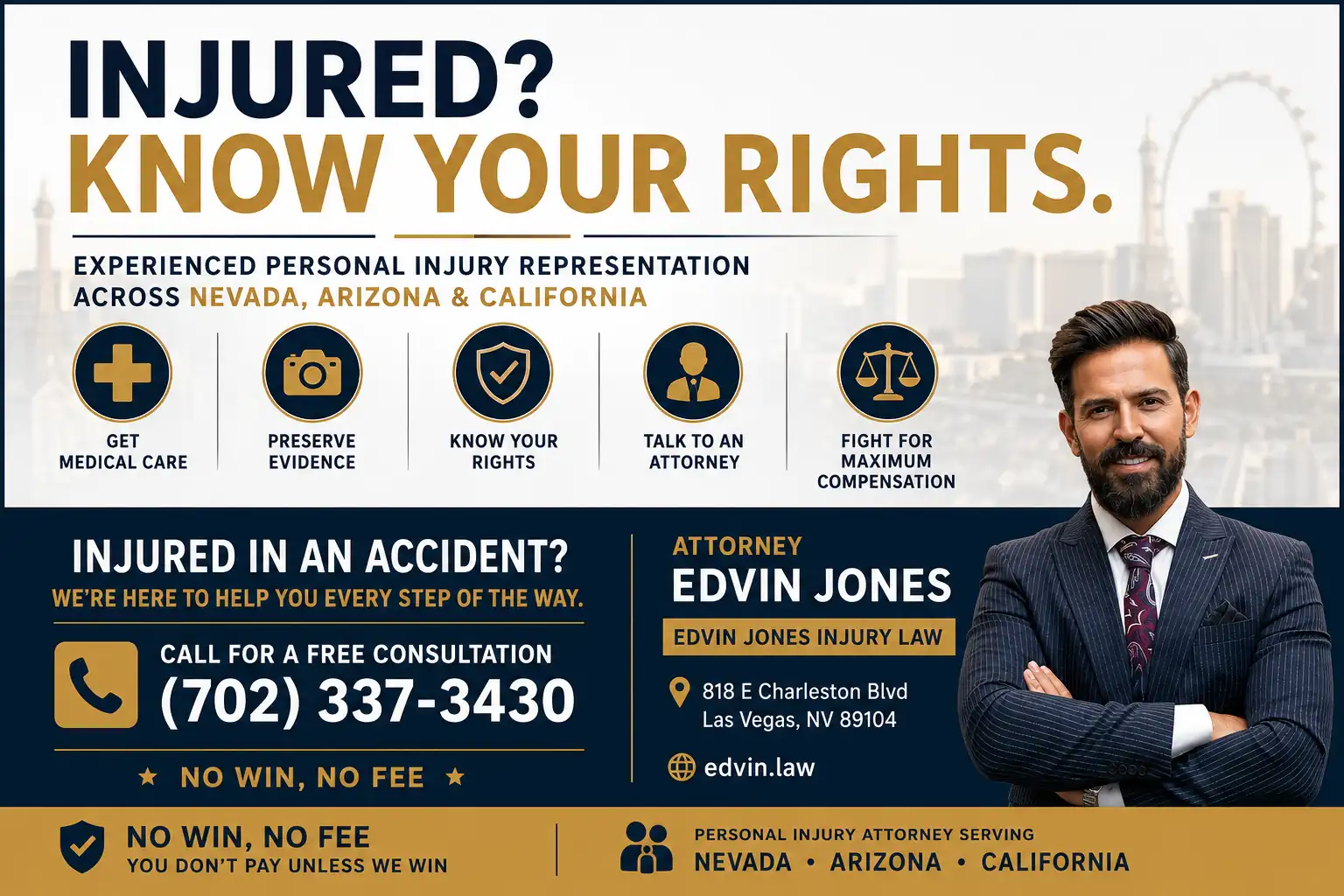
Edvin Jones Injury Law is based at 818 E Charleston Blvd, Las Vegas, Nevada 89104, close to the courts, hospitals, care facilities, and families who need direct help. If you suspect abuse or neglect in a Las Vegas nursing home, call 702-337-3430. The sooner the evidence is preserved, the clearer the case can become.
Nevada, California, and Arizona Elder Neglect Law Compared
Nevada: NRS 41.1395 allows civil recovery for injury, death, or loss caused by abuse, neglect, or exploitation of an older or vulnerable person. It provides for two times actual damages in qualifying cases and attorney’s fees and costs if liability is established by a preponderance of the evidence and the defendant acted with recklessness, oppression, fraud, or malice. Nevada’s general personal injury deadline is two years under NRS 11.190(4)(e), though specific facts can affect timing.
California: The Elder Abuse and Dependent Adult Civil Protection Act defines neglect in Cal. Welf. & Inst. Code § 15610.57. Cal. Welf. & Inst. Code § 15657 can allow enhanced remedies, including attorney’s fees, where abuse is proven by clear and convincing evidence and the defendant acted with recklessness, oppression, fraud, or malice.
Arizona: A.R.S. § 46-455 allows a vulnerable adult whose life or health has been endangered or injured by neglect, abuse, or exploitation to bring a civil action against a person or enterprise that provided care, assumed a legal duty, or was appointed to provide care. Arizona’s general injury deadline is two years under A.R.S. § 12-542.
Contact Edvin Jones Before the Facility Explains It Away
Families often know when something is wrong before they can prove it. That instinct matters. The job of a lawyer is to turn concern into evidence, evidence into accountability, and accountability into a result that protects the injured resident and the family.
If your loved one suffered a fall, pressure sore, infection, dehydration, medication injury, or other suspected neglect in a Nevada care facility, contact Edvin Jones Injury Law at 702-337-3430 or edvinjones.com. Edvin Jones can review the facts and help you decide the next step.
*Edvin Jones is a personal injury attorney with decades of experience representing injured victims across Nevada, California, and Arizona. To speak with Edvin directly, contact Edvin Jones Injury Law at 818 E Charleston Blvd, Las Vegas, Nevada 89104 | 702-337-3430 | edvinjones.com*
Contact Edvin Jones Injury Law — Free Consultation
No Win, No Fee. We Speak English, Farsi, Turkish, Russian & Arabic.
Address: 818 E Charleston Blvd, Las Vegas, NV 89104
Phone: 702-337-3430
Website: edvin.law
Instagram: edvinjonesinjurylaw | TikTok: edvin.law
Licensed in Nevada | Arizona | California
Disclaimer: This article is for informational purposes only and does not constitute legal advice. Reading this article does not create an attorney-client relationship.
Frequently Asked Questions
1. What is considered nursing home neglect in Nevada?
Nursing home neglect occurs when a facility or caregiver fails to provide necessary care, such as proper nutrition, hydration, hygiene, medical treatment, supervision, or assistance, resulting in injury or harm to a resident.
2. What are the warning signs of nursing home neglect?
Common warning signs include unexplained bruises, pressure sores, dehydration, sudden weight loss, frequent falls, poor hygiene, untreated infections, medication errors, emotional withdrawal, and changes in behavior or mood.
3. What should I do if I suspect my loved one is being neglected?
Prioritize your loved one’s safety and medical care. Photograph injuries and living conditions, request medical and facility records, document conversations with staff, and consult an experienced nursing home neglect attorney as soon as possible.
4. What compensation may be available in a nursing home neglect case?
Depending on the circumstances, victims and their families may recover compensation for medical expenses, pain and suffering, emotional distress, additional care costs, financial losses, and, in some cases, wrongful death damages.
5. Why should I hire a Las Vegas nursing home neglect lawyer?
Nursing home neglect cases often involve complex medical records, facility policies, staffing issues, and aggressive insurance defenses. An experienced Las Vegas nursing home neglect lawyer can preserve critical evidence, investigate the facility’s conduct, and fight for the full compensation your family deserves.