By Edvin Jones, Attorney at Law | Edvin Jones Injury Law | Contingency Fee Lawyer
Quick Takeaways
- Property owners and operators may have a legal duty to take reasonable steps to keep swimming pool areas safe.
- Potential hazards can include inadequate fencing, defective drain covers, unsafe pool surfaces, insufficient supervision, and inadequate warnings.
- Hotels, resorts, homeowners, HOAs, and other property operators may potentially be responsible depending on the circumstances.
- A near-drowning can cause permanent brain damage and lifelong care needs, making a complete assessment of future damages important.
- Pool accident cases should be investigated promptly because surveillance footage, maintenance records, witness information, and physical evidence can disappear or change.
Swimming Pool Accidents and Drownings: Premises Liability Explained
Las Vegas is known for its large resort pools, hotel pools, apartment complexes, community pools, and private residential swimming pools.
While pools provide recreation and relief from the heat, they can also present serious risks. A drowning or near-drowning can occur within minutes. Other pool accidents may involve slips and falls, diving injuries, defective equipment, unsafe pool surfaces, or entrapment.
When someone is injured on another person’s property, Nevada premises liability law may provide a legal basis for seeking compensation when the property owner or operator failed to take reasonable precautions.
A pool accident lawyer in Las Vegas can investigate what happened, determine whether negligence contributed to the accident, identify potentially responsible parties, and evaluate the resulting damages.
When Is a Property Owner Liable for a Pool Accident?
A property owner or operator is not automatically responsible for every accident that occurs in a swimming pool.
Generally, the circumstances surrounding the accident must be examined to determine whether the property owner or another responsible party failed to meet an applicable legal duty.
Potential hazards can include:
Inadequate Pool Fencing
Swimming pools can pose particularly serious risks to young children.
Failure to maintain appropriate barriers, gates, or other safety measures may be relevant when a child gains access to a pool and is injured.
Inadequate Lifeguard Supervision
Hotels, resorts, public facilities, and other pool operators may provide lifeguards or other supervision depending on the facility and applicable requirements.
If inadequate supervision contributed to an accident, that evidence may be relevant to a premises liability claim.
Defective or Missing Drain Covers
Pool and spa drains can create serious entrapment hazards when appropriate safety measures are missing, damaged, or improperly maintained.
Federal pool-safety requirements may apply to certain public pools and spas, including requirements associated with anti-entrapment drain systems.
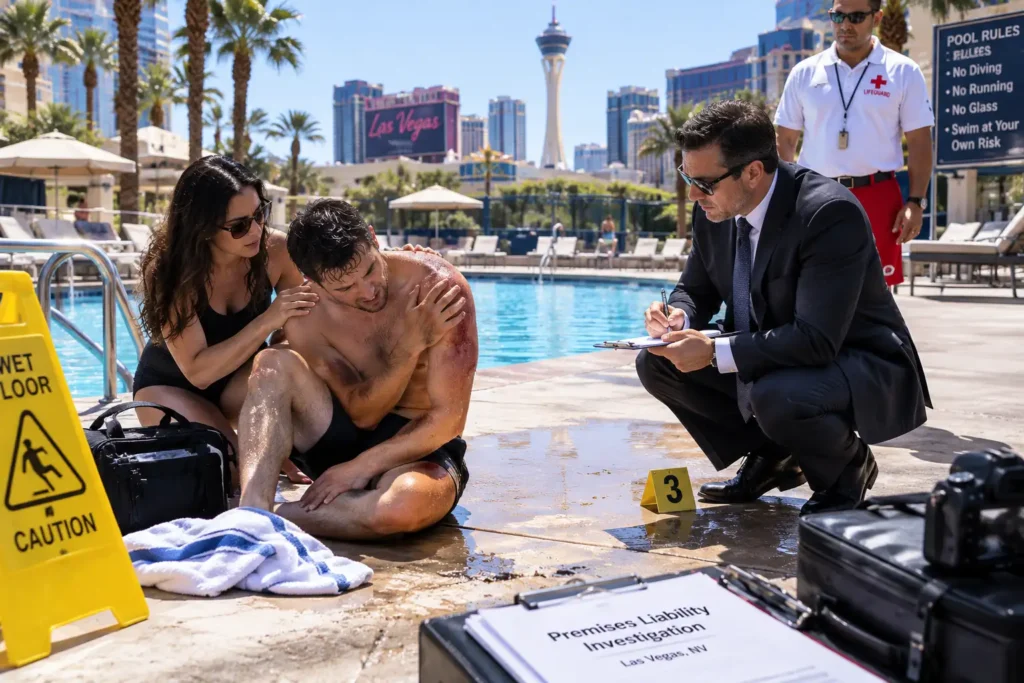
Slippery Pool Decks
Wet surfaces are common around swimming pools, but property operators may still need to address unreasonable hazards.
Poorly maintained surfaces, unexpected changes in flooring, or inadequate warnings can contribute to slip-and-fall accidents.
Improper Pool Chemical Maintenance
Improperly maintained pool chemicals can potentially cause skin, eye, respiratory, or other injuries.
Maintenance records and inspection documentation may help determine whether the pool was being properly maintained.
Inadequate Depth Markings or Warnings
A swimmer or diver can suffer catastrophic injuries when water depth is incorrectly marked or a dangerous condition is not adequately identified.
Evidence concerning pool design, signage, maintenance, and applicable safety standards may become important in these cases.
The Attractive Nuisance Doctrine and Swimming Pools
Swimming pools can create special legal considerations when children are involved.
The attractive nuisance doctrine concerns dangerous artificial conditions on property that may attract children who do not fully understand the associated risks.
Whether the doctrine applies in a particular Nevada case depends on the circumstances and applicable law. The fact that a child entered a property without permission does not necessarily resolve the property owner’s potential liability.
When a child is injured or drowns after gaining access to an inadequately secured swimming pool, the circumstances surrounding fencing, gates, supervision, and the property’s accessibility should be carefully investigated.
Are Hotels and Casinos Responsible for Pool Accidents?
Hotels, resorts, and casinos operate pools used by large numbers of guests.
Depending on the circumstances, potential issues can include:
- Inadequate lifeguard coverage
- Failure to maintain safety equipment
- Unsafe pool-deck conditions
- Defective or poorly maintained equipment
- Inadequate warnings
- Failure to address known hazards
- Inadequate security or access controls
- Failure to properly inspect and maintain the pool area
A hotel or resort is not automatically liable simply because an accident occurred on its property. Evidence must establish the applicable duty and how it was allegedly breached.
What Evidence Is Important in a Pool Accident Case?
Pool accident cases can depend heavily on evidence that may disappear quickly.
Important evidence may include:
- Photographs and videos of the accident scene
- Surveillance-camera footage
- Pool maintenance records
- Inspection records
- Lifeguard schedules and training records
- Incident reports
- Witness statements
- Pool chemical records
- Equipment maintenance records
- Safety policies and procedures
- Photographs of fencing, gates, signs, and drains
- Medical records
If the accident occurred at a hotel, resort, apartment complex, or other commercial property, surveillance footage can be especially important.
Promptly requesting preservation of relevant evidence may therefore be critical.
What Injuries Can Result From a Pool Accident?
Swimming pool accidents can cause injuries ranging from relatively minor wounds to permanent disabilities.
Potential injuries include:
- Traumatic brain injuries
- Hypoxic or anoxic brain injuries following oxygen deprivation
- Spinal cord injuries
- Broken bones
- Neck injuries
- Drowning and near-drowning injuries
- Lacerations
- Slip-and-fall injuries
- Permanent neurological impairment
- Death
A near-drowning can have consequences long after the person leaves the hospital. In serious cases, an injured person may require ongoing rehabilitation, medical treatment, assistance with daily activities, or long-term care.
Compensation in Pool Accident and Drowning Cases
Depending on the circumstances, an injured person may be able to pursue compensation for qualifying losses.
Medical Treatment
This may include emergency treatment, hospitalization, intensive care, surgery, rehabilitation, medication, and other necessary medical expenses.
Future Medical and Long-Term Care
When a near-drowning causes permanent neurological or physical impairment, future medical treatment and long-term care can become a significant part of the claim.
Lost Income and Earning Capacity
If an injury prevents someone from working or permanently affects their ability to earn income, qualifying lost wages and diminished earning capacity may be recoverable.
Pain and Suffering
Severe injuries can affect physical comfort, emotional health, independence, and quality of life.
Wrongful Death
When a pool accident results in death, surviving family members may potentially pursue a wrongful death claim for qualifying losses under Nevada law.
Potential damages can include certain funeral and burial expenses, financial losses, and loss of companionship, depending on the circumstances.
What Should You Do After a Pool Accident?
If you or a loved one has been involved in a serious pool accident, consider taking these steps when possible:
Get Emergency Medical Care
Drowning and near-drowning incidents require immediate medical attention. Even when someone appears to recover quickly, complications can develop after the incident.
Report the Accident
Notify the property owner, manager, hotel, resort, or other responsible operator as appropriate and request a copy of any incident report.
Document the Scene
Take photographs or video of the pool, surrounding area, fencing, gates, signs, drains, deck surfaces, and any other conditions that may have contributed to the accident.
Identify Witnesses
Obtain contact information for people who witnessed the incident or observed the conditions beforehand.
Preserve Evidence
Do not assume that the property owner will preserve surveillance footage or maintenance records indefinitely. Prompt legal action may help protect important evidence.
Speak With an Attorney
A serious pool accident can involve premises liability, product liability, insurance, government-claim rules, or wrongful death issues. An attorney can evaluate which legal claims may apply.
Contact Edvin Jones Injury Law — Free Consultation
No Win, No Fee. We Speak English, Farsi, Turkish, Russian & Arabic.
Address: 818 E Charleston Blvd, Las Vegas, NV 89104
Phone: 702-337-3430
Website: edvin.law
Instagram: edvinjonesinjurylaw | TikTok: edvin.law
Licensed in Nevada | Arizona | California
Disclaimer: This article is for informational purposes only and does not constitute legal advice. Reading this article does not create an attorney-client relationship.
Frequently Asked Questions
1. Can I sue a hotel if my child nearly drowned in its pool?
Potentially, if evidence shows that the hotel’s negligence or another legally actionable condition contributed to the accident.
Issues such as inadequate supervision, unsafe pool conditions, defective safety equipment, or inadequate barriers may be relevant.
Hotels and resorts can have significant responsibilities toward their guests, but liability must be established based on the specific facts of the accident.
2. What if my neighbor’s pool was the site of the accident?
A homeowner’s insurance policy may potentially provide coverage for certain pool-related injuries.
Whether the homeowner is legally responsible depends on the circumstances, including how the accident occurred, the condition of the property, and applicable Nevada law.
An attorney can evaluate available insurance coverage and potential liability without assuming that filing a lawsuit against the homeowner is the only option.
3. What is the statute of limitations for a pool accident claim in Nevada?
Nevada generally provides two years for many personal injury claims.
However, the applicable deadline can vary depending on the type of claim and the identity of the potentially responsible party.
For example, claims involving government entities can involve special notice requirements and shorter deadlines.
Because missing a deadline can prevent recovery, a potential claim should be evaluated promptly.
4. What if the pool owner says I was responsible for my own injury?
A property owner or insurance company may argue that the injured person contributed to the accident.
Nevada’s comparative negligence rules can affect how much compensation an injured person may recover when multiple parties share responsibility.
The specific facts—including warnings, pool conditions, the person’s conduct, and the owner’s conduct—must be evaluated before determining whether comparative negligence applies.
5. Can a pool accident lead to a wrongful death claim?
Yes. When a person dies as a result of a pool accident, eligible surviving family members or representatives may potentially pursue a wrongful death claim under Nevada law.
The available damages and who may bring the claim depend on the circumstances and applicable statutes.