By Edvin Jones, Attorney at Law | Edvin Jones Injury Law | comparative negligence
Quick Takeaways
- Being partly at fault doesn’t automatically prevent compensation. Your recovery depends on the laws of the state where your claim is handled.
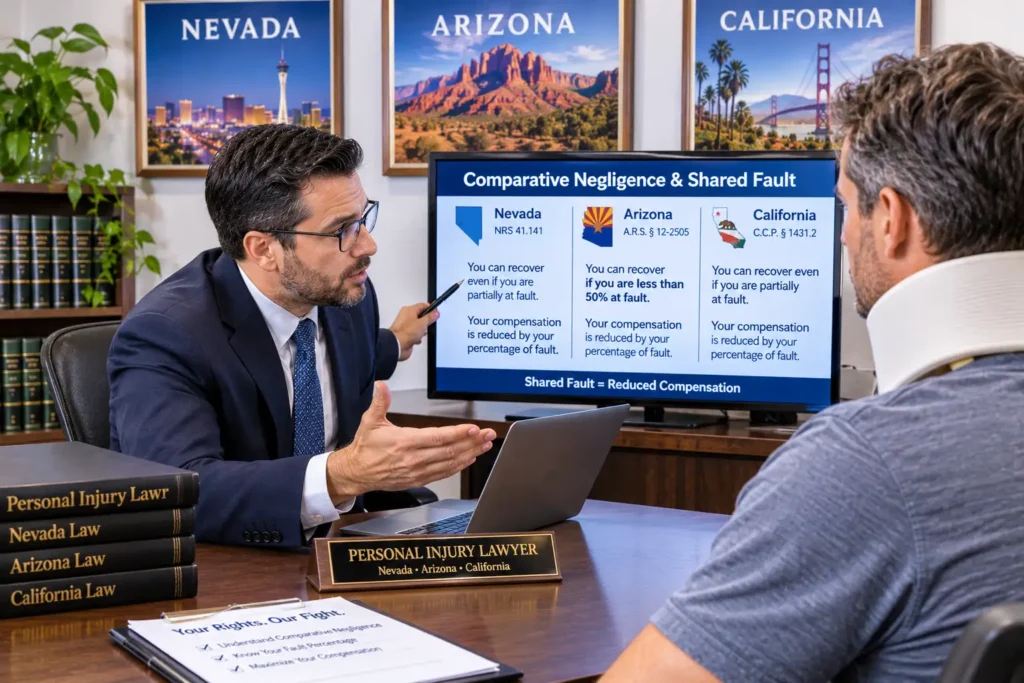
- Nevada follows a modified comparative negligence rule. Generally, you can recover damages if your fault is not greater than the fault of the party or parties you are suing.
- Arizona and California use pure comparative negligence. You may recover damages even if you were mostly responsible, although your compensation is reduced by your share of fault.
- Your percentage of fault matters. Evidence such as police reports, photographs, dashcam footage, and witness statements can influence how responsibility is determined.
- Insurance companies may try to shift blame. Understanding your rights and preserving evidence can help protect your claim.
- Get legal advice before accepting a settlement. An early offer may not reflect the full extent of your injuries or the evidence concerning fault.
After an accident, one of the first questions is often: Who was responsible? But determining fault is not always straightforward. More than one person may have contributed to a collision, and insurance companies may argue that you share some of the blame.
That matters because Nevada, Arizona, and California each have rules that determine how shared fault affects personal injury compensation. Depending on the state and the percentage of responsibility assigned to you, your compensation may be reduced—or, in certain circumstances, you may be unable to recover damages.
At Edvin Jones Injury Law, we help injured people understand their rights and navigate personal injury claims across Nevada, Arizona, and California.
Nevada: Understanding the 51% Fault Rule
Nevada follows a modified comparative negligence system under NRS 41.141. Under this rule, an injured person may generally recover damages if their negligence is not greater than the negligence of the party or parties against whom they seek recovery.
In practical terms:
- 50% at fault or less: You may recover compensation, reduced by your percentage of fault.
- More than 50% at fault: You generally cannot recover damages from the defendants under Nevada’s comparative negligence rule.
- Example: If your total damages are $100,000 and you are found 20% responsible, your potential recovery would be reduced to $80,000, assuming the other requirements for recovery are met.
The distinction between 50% and 51% can be critical. If you are found equally responsible as the opposing party, you may still qualify for compensation. If your share of fault is greater, the rule can bar recovery.
However, fault is not determined simply because an insurance adjuster says you caused the accident. The available evidence and applicable law matter.
Arizona: Pure Comparative Negligence
Arizona follows a pure comparative negligence system under A.R.S. § 12-2505. Unlike Nevada, Arizona generally allows an injured person to recover damages even when they are more responsible for an accident than the other party.
Your compensation is reduced according to your percentage of fault.
For example:
- 20% at fault: You could recover $80,000 from $100,000 in damages.
- 70% at fault: You could recover $30,000 from $100,000 in damages.
- 90% at fault: You could recover $10,000 from $100,000 in damages.
These examples assume $100,000 in legally recoverable damages and that the other necessary requirements for liability are satisfied.
Arizona’s rule means that being mostly responsible does not automatically eliminate your right to compensation. Nevertheless, proving the other party’s legal responsibility remains important.
California: Shared Fault and Personal Injury Claims
California also follows a pure comparative negligence system. Under this approach, an injured person can generally recover damages even if they contributed significantly to the accident.
The court or parties resolving the claim determine the applicable share of fault, and the injured person’s damages are reduced accordingly.
For example, if your damages total $100,000 and you are found 70% responsible, your potential recovery would be $30,000.
This rule can apply to many negligence-based personal injury claims, including car accidents, pedestrian accidents, and slip-and-fall incidents. The details depend on the circumstances of the case and the applicable law.

Why the Difference Between These States Matters
Imagine a collision in which a driver suffers $100,000 in damages and is found 55% responsible, while the other party is responsible for the remaining 45%.
The outcome may differ significantly depending on the state:
- Nevada: The driver generally cannot recover from the other party under the modified comparative negligence rule because their fault exceeds 50%.
- Arizona: The driver could potentially recover $45,000, representing the other party’s 45% share.
- California: The driver could potentially recover $45,000 under the pure comparative negligence system.
These examples illustrate why the location of an accident and the applicable law can make a substantial difference to an injury claim.
In real cases, determining the applicable law may involve additional questions, especially when an accident involves parties or events connected to more than one state.
How Insurance Companies Use Comparative Fault
Insurance companies often investigate whether an injured person contributed to an accident. If an insurer believes you were partly responsible, it may argue that your compensation should be reduced.
For example, after a car accident, an insurer might claim that you were speeding, failed to maintain a proper lookout, or reacted too late. In a slip-and-fall case, it might argue that you ignored a warning sign or should have noticed a hazard.
Some arguments may be supported by evidence; others may be disputed. You do not have to accept an insurer’s fault assessment without examining the facts.
Evidence that may help establish what happened includes:
- Police or incident reports.
- Photographs and videos of the scene.
- Dashcam or surveillance footage.
- Witness names and statements.
- Medical records documenting your injuries.
- Vehicle damage and accident reconstruction evidence, when appropriate.
Preserving this evidence early can make it easier to evaluate disputed accounts of an accident.
How to Protect Your Personal Injury Claim
If an insurance company argues that you were partly responsible, take practical steps to protect your position.
1. Avoid making assumptions about fault.
Be truthful when discussing the accident, but avoid guessing about what happened or making unsupported statements about responsibility.
2. Preserve evidence.
Keep photographs, videos, witness information, medical records, and correspondence with insurers. Evidence may become harder to obtain as time passes.
3. Be cautious with recorded statements.
Before providing a recorded statement to another party’s insurance company, consider consulting an attorney so you understand your rights and the potential consequences.
4. Review settlement offers carefully.
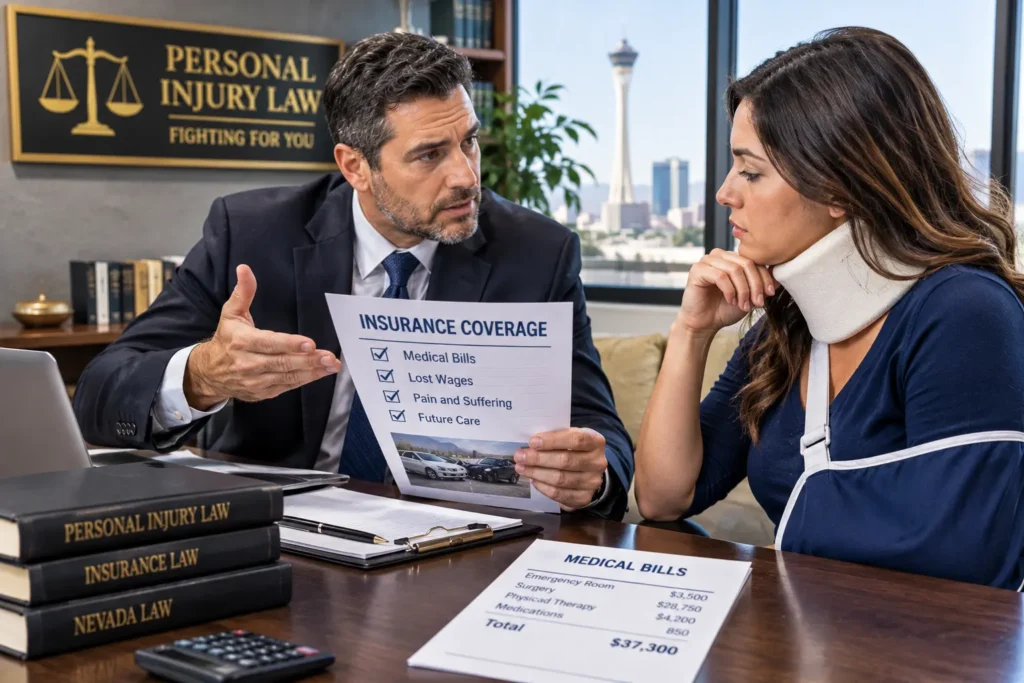
A settlement offer should be evaluated in light of your injuries, medical expenses, lost income, future needs, and the evidence concerning fault. Do not assume an initial offer reflects the full value of your claim.
5. Speak with an attorney familiar with the applicable state law.
A personal injury attorney can assess the evidence, explain how comparative negligence may affect your claim, and help you understand your options.
How Edvin Jones Injury Law Can Help
Shared-fault disputes can become complicated, particularly when an insurer tries to assign you a larger percentage of responsibility than the evidence supports.
Edvin Jones Injury Law assists injured people with understanding their rights, evaluating evidence, communicating with insurers, and pursuing compensation where legally available.
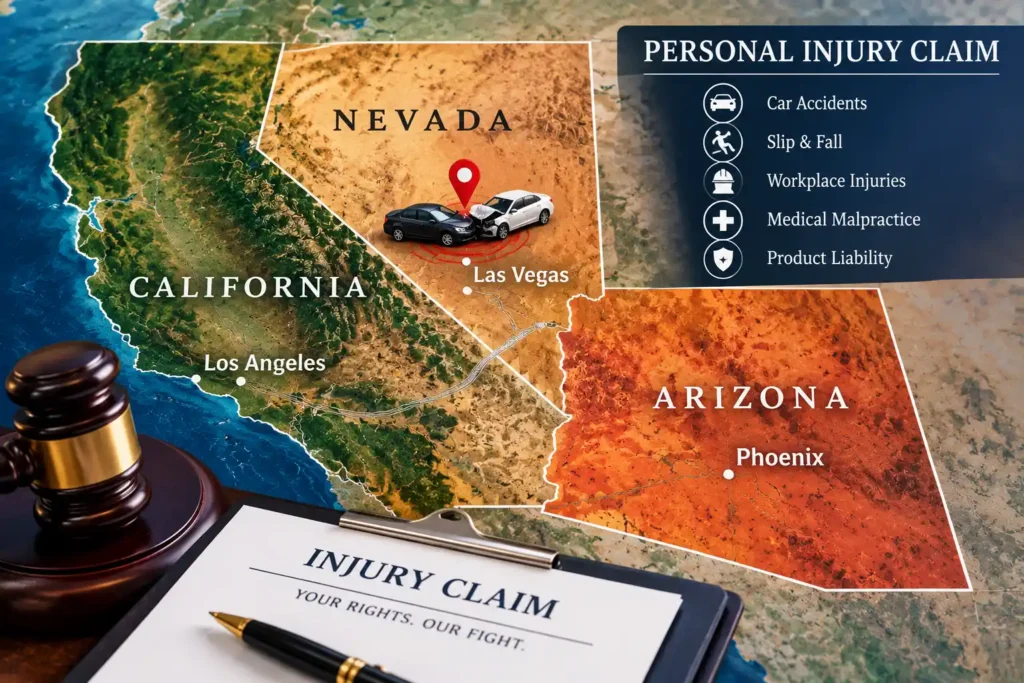
Our firm is licensed in Nevada, Arizona, and California. We can help you understand how the applicable state’s comparative negligence rules may affect your case.
You do not have to accept an insurance company’s version of events without reviewing the evidence.
Contact Edvin Jones Injury Law for a free consultation to discuss your situation and learn about your legal options.
Contact Us
Edvin Jones Injury Law | Edvin Jones, Attorney at Law
Contact Edvin Jones Injury Law — Free Consultation
No Win, No Fee. We Speak English, Farsi, Turkish, Russian & Arabic.
Address: 818 E Charleston Blvd, Las Vegas, NV 89104
Phone: 702-337-3430
Website: edvin.law
Instagram: edvinjonesinjurylaw | TikTok: edvin.law
Licensed in Nevada | Arizona | California
Disclaimer: This article is for informational purposes only and does not constitute legal advice. Reading this article does not create an attorney-client relationship.
Frequently Asked Questions
1. What is comparative negligence in a personal injury case?
Comparative negligence is a legal system used to determine how a person’s own responsibility for an accident affects their compensation. Depending on the state, damages may be reduced by the injured person’s percentage of fault, and some systems may prevent recovery when that percentage exceeds a specified threshold.
2. What happens if I am 51% at fault for an accident in Nevada?
Under Nevada’s modified comparative negligence rule, you generally cannot recover damages from the defendant or defendants if your negligence is greater than theirs combined. If you are found 51% responsible and the opposing party or parties account for the remaining 49%, your claim is generally barred under NRS 41.141.
3. Can I recover compensation if I am mostly at fault in Arizona?
Potentially, yes. Arizona generally follows pure comparative negligence, which means your damages may be reduced by your percentage of fault without an automatic cutoff at 50% or 51%. You must still establish the other party’s legal responsibility and satisfy the other requirements for your claim.
4. Does California allow compensation if I share most of the blame?
Generally, yes. California’s pure comparative negligence system allows an injured person to seek damages even when they are primarily responsible for an accident. The amount recoverable is reduced according to their share of fault, subject to the applicable law and circumstances.
5. What should I do if the insurance company says the accident was my fault?
Do not assume the insurer’s conclusion is final. Preserve relevant evidence, avoid speculating about fault, review any settlement offer carefully, and consider consulting a personal injury attorney. An attorney can evaluate the evidence and explain how the applicable comparative negligence rules may affect your claim.
Disclaimer
This article is for informational purposes only and does not constitute legal advice. Reading this article does not create an attorney-client relationship. Laws differ across Nevada, Arizona, and California, and the outcome of each case depends on its specific facts. Consult an attorney licensed in the relevant jurisdiction for advice about your situation.