By Edvin Jones, Attorney at Law | Edvin Jones Injury Law | Uber accident lawyer Las Vegas
Quick Takeaways
- Insurance coverage depends on the driver’s app status. The coverage available after an Lyft or Uber crash in Las Vegas can change depending on whether the driver was offline, waiting for a ride request, or completing a trip.
- A $1 million liability policy may apply during an active ride. Coverage depends on the circumstances, the applicable policy, and the driver’s status when the crash occurred.
- Passengers, other motorists, pedestrians, and cyclists may have claims. The available legal options depend on who caused the collision and the losses suffered.
- Multiple insurance companies may be involved. Uber or Lyft’s insurer, the driver’s personal insurer, and another driver’s insurer may dispute responsibility for payment.
- Preserve evidence quickly. Save trip details, report the crash, obtain medical care, and keep records of injuries and expenses.
- Be cautious about early settlements. Consider the full extent of your injuries and potential future medical needs before agreeing to settle a claim.
- Edvin Jones Law Firm provides your suitable service in two offices.
Injured in an Uber or Lyft Accident in Las Vegas, Phoenix, or LA?
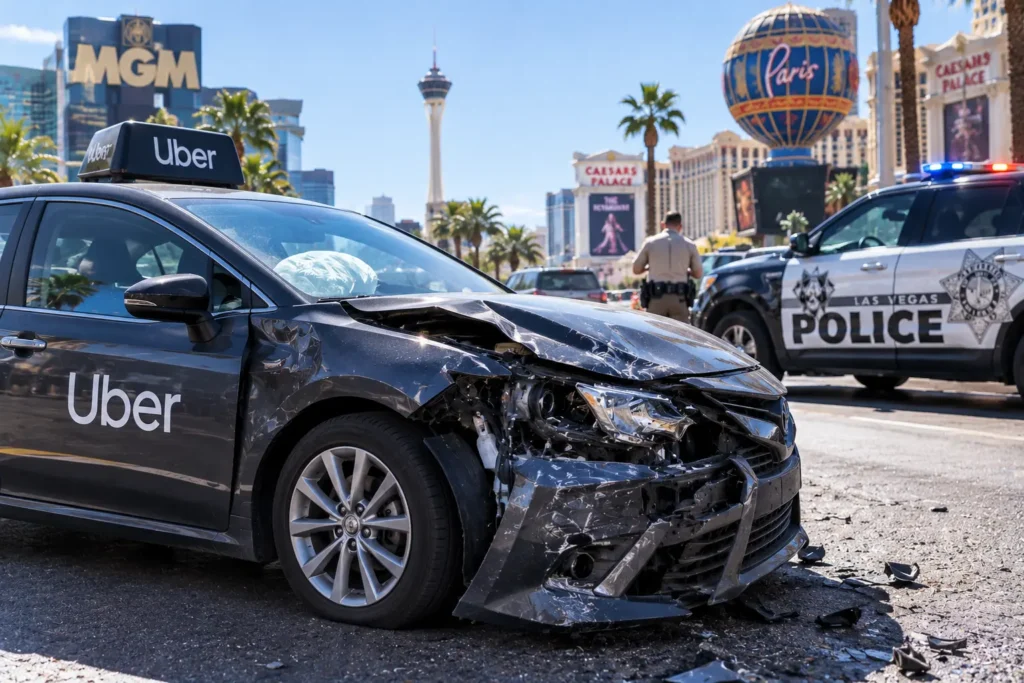
Rideshare services are a common way to get around Las Vegas, Phoenix, and Los Angeles. But with more Uber and Lyft trips on the road, collisions involving rideshare vehicles can leave passengers and other road users facing serious injuries, unexpected expenses, and complicated insurance questions.
Whether you were riding in an Uber or Lyft, driving another vehicle, walking, or cycling, one question often comes first: Whose insurance pays for your injuries?
The answer depends on several factors, including what the rideshare driver was doing in the app when the crash occurred, who was at fault, which insurance policies apply, and the laws of the state where the accident happened.
Understanding these factors can help you protect your rights and make informed decisions after a rideshare collision.
Uber and Lyft Accident Coverage Depends on the Driver’s App Status
Uber and Lyft maintain insurance arrangements that may provide coverage when a driver is using the platform. However, the amount and type of coverage available generally depend on the driver’s activity at the time of the accident.
1. The Driver Is Offline
If the driver is not logged into the Uber or Lyft app and is not using the platform for a trip, the driver’s personal auto insurance is generally the primary policy to investigate.
In this situation, the rideshare company’s insurance may not apply. The driver’s personal policy, any applicable coverage held by another involved driver, and the circumstances of the collision will help determine which insurance options are available.
2. The Driver Is Online and Waiting for a Ride Request
When the driver has turned on the app and is waiting for a ride request, a different level of insurance coverage may apply.
Depending on the platform’s policy and applicable state law, limited third-party liability coverage may be available if the driver causes a collision during this period. The limits commonly associated with this phase have included $50,000 per injured person, $100,000 per accident for bodily injury, and $25,000 for property damage, but current policy terms and state-specific requirements should be verified.
The exact coverage available depends on the applicable policy, the driver’s status, and the facts of the accident.
3. The Driver Is Going to Pick Up a Passenger or Has a Passenger in the Vehicle
When a driver has accepted a ride request and is on the way to pick up a passenger, or is transporting a passenger during an active trip, a higher level of rideshare insurance coverage generally applies.
Uber and Lyft have commonly maintained up to $1 million in third-party liability coverage for qualifying periods when a ride is accepted or underway. Uninsured or underinsured motorist coverage may also be available in certain circumstances, subject to the applicable policy and state law.
The actual coverage and limits must be confirmed for the specific accident. A $1 million policy limit does not mean every injured person automatically receives that amount. Liability, damages, policy terms, and the number of claims can all affect recovery.
Why does the driver’s app status matter?
Because the driver’s status can determine which insurance policies apply and what limits may be available. Trip records, timestamps, app activity, and other evidence can therefore be important when investigating a rideshare crash.
Who Can Recover Compensation After an Uber or Lyft Accident?
You do not necessarily have to be a rideshare passenger to pursue a claim after an Uber or Lyft collision. Depending on the facts, several types of people may have potential claims.
Passengers in the Uber or Lyft
If you were a passenger and the rideshare vehicle was involved in a collision, you may be able to pursue compensation if another party’s negligence caused or contributed to your injuries.
Potential claims may involve the rideshare driver, another driver, or applicable insurance policies. In some cases, more than one party may share responsibility.
Occupants of Another Vehicle
If an Uber or Lyft driver crashes into your vehicle, you may be able to bring a claim against the responsible driver and seek compensation through applicable insurance coverage.
If another motorist caused the crash while the rideshare driver was carrying a passenger, that motorist’s insurance may also be relevant.
Pedestrians and Cyclists
Pedestrians and cyclists injured in rideshare collisions may also have legal options. The available claims depend on how the collision occurred, who was responsible, and the applicable insurance coverage.
Because pedestrians and cyclists have limited physical protection, collisions can result in substantial medical expenses and long-term injuries.
The Rideshare Driver
An Uber or Lyft driver who is injured in a collision may also have options for compensation, depending on who caused the crash, the driver’s app status, the available insurance policies, and any applicable personal coverage.
The driver’s eligibility for particular benefits or insurance protections depends on the specific circumstances.
Nevada, Arizona, and California Have Different Legal Rules
Although rideshare companies operate across state lines, the legal rules governing accident claims are not identical in Nevada, Arizona, and California.
Comparative Negligence and Fault
Each state has rules for determining how a person’s own share of fault affects their ability to recover damages.
- Nevada: Nevada generally bars recovery of damages when a claimant’s negligence is greater than the negligence of the party or parties against whom recovery is sought. When the claimant’s negligence is not greater, damages may be reduced proportionally.
- Arizona: Arizona generally follows a pure comparative negligence system, under which a claimant’s damages may be reduced according to their percentage of fault.
- California: California also generally follows a pure comparative negligence system, which can allow recovery even when the injured person shares substantial responsibility, with damages reduced proportionally.
Fault can be disputed in rideshare accidents. Evidence such as traffic camera footage, witness statements, photographs, vehicle damage, and app records may help establish how the collision happened.
Filing Deadlines
Personal injury lawsuits are subject to legal deadlines, often called statutes of limitations. A missed deadline can affect your ability to pursue compensation.
A two-year deadline commonly applies to many personal injury claims in Nevada, Arizona, and California. However, exceptions may apply, and different deadlines can govern claims involving government entities, minors, or other special circumstances.
Do not assume that every rideshare claim has the same deadline. The relevant date, the parties involved, and the nature of the claim can affect the time available to take legal action.
Why Uber and Lyft Accident Claims Can Become Disputed
Rideshare accident cases can involve several insurers, overlapping policies, and questions about who was responsible for the crash.
Multiple Insurance Companies May Be Involved
The rideshare company’s insurer, the driver’s personal auto insurer, and the insurer of another driver may all become involved in the investigation.
Each insurer may examine the driver’s app status, the cause of the crash, the applicable policy language, and the extent of the injuries. Disagreements can arise over which policy applies and which party should pay.
Important Evidence May Be Lost
App records and trip information can be important in determining whether a rideshare driver was offline, waiting for a request, heading to a pickup, or transporting a passenger.
Other useful evidence may include:
- Police reports and incident numbers
- Photographs and videos of the collision
- Witness names and contact information
- Medical records and treatment bills
- Trip receipts and ride details
- Messages or correspondence with the rideshare company
- Proof of lost wages and other financial losses
Preserving this information early can help support your account of what happened.
An Early Settlement May Not Reflect Your Full Losses
Some injuries require continuing medical care, rehabilitation, or time away from work. Immediately after a collision, it may be difficult to understand the full extent of your injuries or whether you will need additional treatment.
Before accepting a settlement or signing a release, consider whether the proposed amount accounts for your documented losses and reasonably anticipated future needs. A settlement may limit your ability to pursue further compensation for the same claim.

What to Do After an Uber or Lyft Accident
Taking a few practical steps after a rideshare collision can help protect your health and preserve evidence.
- Get medical attention. Call emergency services if necessary and seek prompt medical evaluation. Some injuries may not be immediately obvious.
- Report the collision. Notify the police when appropriate and report the accident through the Uber or Lyft app if you were using the platform.
- Save your trip details. Take screenshots of the trip receipt, driver information, pickup and drop-off details, and relevant communications.
- Document the scene. If it is safe to do so, photograph the vehicles, visible injuries, road conditions, traffic signals, and other relevant details.
- Keep your records. Save medical bills, treatment records, repair estimates, receipts, and documents showing lost income.
- Be careful when speaking with insurers. Provide accurate information, but avoid speculating about fault or the extent of injuries before you have sufficient information.
- Review any settlement before accepting. Make sure you understand what rights you may be giving up and whether the proposed settlement addresses your losses.
If you are unsure which insurance policy applies or how to respond to an insurer, consider seeking legal advice from an attorney familiar with rideshare accident claims in the relevant state.
How Edvin Jones Injury Law Can Help After an Uber or Lyft Accident
Rideshare accident claims may involve multiple insurers, questions about app status, disputed liability, and complicated coverage provisions. Understanding these issues can be important when evaluating your options for compensation.
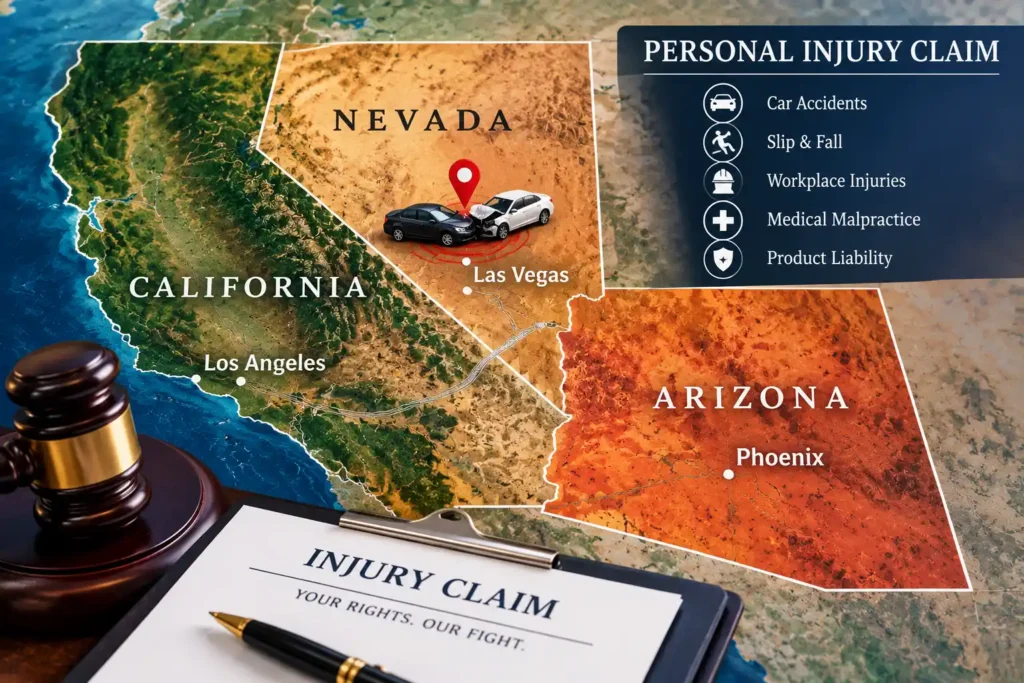
Edvin Jones Injury Law handles Uber and Lyft accident claims in Las Vegas, Phoenix, Los Angeles, and throughout Nevada, Arizona, and California.
Depending on the facts of your case, our work may include reviewing relevant insurance coverage, helping preserve evidence, assessing accident-related losses, communicating with insurance companies, and evaluating settlement offers.
Every case is different, and no particular result can be guaranteed. The legal options available to you will depend on the evidence, applicable insurance policies, and state law.
Injured in an Uber or Lyft Accident? Contact Edvin Jones Injury Law
If you were injured in a rideshare collision in Las Vegas, Phoenix, or Los Angeles, you do not have to navigate the insurance process without guidance.
Contact Edvin Jones Injury Law to discuss your accident, understand your potential options, and learn what steps may be appropriate for your situation.
We offer a free consultation. Representation may be available on a contingency-fee basis under a written agreement, with attorney fees and responsibility for case costs governed by the terms of that agreement.
Contact Us
Edvin Jones Injury Law | Edvin Jones, Attorney at Law
Contact Edvin Jones Injury Law — Free Consultation
No Win, No Fee. We Speak English, Farsi, Turkish, Russian & Arabic.
Address:
Phone: 702-337-3430
Website: edvin.law
Instagram: edvinjonesinjurylaw | TikTok: edvin.law
Licensed in Nevada | Arizona | California
Disclaimer: This article is for informational purposes only and does not constitute legal advice. Reading this article does not create an attorney-client relationship.
Frequently Asked Questions
Whose insurance pays after an Uber or Lyft accident?
The answer depends on who caused the crash, the rideshare driver’s app status, and the insurance policies that apply. The driver’s personal insurance may be relevant when the driver is offline, while rideshare coverage may apply during qualifying periods when the driver is using the platform. Another driver’s insurance may also be involved.
Does Uber or Lyft provide $1 million in accident coverage?
Uber and Lyft have commonly maintained up to $1 million in third-party liability coverage during qualifying periods when a driver is on the way to pick up a passenger or is completing a trip. The applicable policy, state law, driver’s status, and circumstances of the collision determine what coverage is actually available. The policy limit does not guarantee a particular payment to an injured person.
What happens if an Uber driver causes an accident while waiting for a ride request?
When the driver is logged into the app and waiting for a request, a limited level of rideshare liability coverage may apply. The limits and conditions depend on the current policy and applicable state law. The driver’s personal policy may also be relevant.
Can I make a claim if I was a passenger in an Uber or Lyft?
Yes, you may have a claim if you were injured as a passenger and another party’s negligence caused or contributed to the crash. Depending on the facts, the claim may involve the rideshare driver, another driver, or applicable insurance coverage.
Can I file a claim if an Uber or Lyft driver hit my car?
Potentially. If the rideshare driver caused the collision, you may be able to pursue a claim against the responsible driver and seek compensation under applicable insurance coverage. The driver’s app status can help determine which policy may apply.
Can pedestrians and cyclists pursue rideshare accident claims?
Yes. Pedestrians and cyclists injured in an Uber or Lyft collision may have legal options if another party was responsible. Available compensation and insurance coverage depend on the facts of the accident and the applicable law.
What if the rideshare driver and another driver both contributed to the crash?
More than one party may share responsibility. Nevada, Arizona, and California have rules governing how comparative fault affects damages. The amount you may recover can depend on each party’s share of responsibility and the laws applicable to your claim.
How long do I have to file an Uber or Lyft accident lawsuit?
A two-year limitation period commonly applies to many personal injury claims in Nevada, Arizona, and California, but exceptions and different deadlines may apply. Claims involving government entities or other special circumstances can have different requirements. Consult an attorney promptly to determine the deadline for your case.
What evidence should I save after a rideshare accident?
Save trip receipts, screenshots of the app, driver details, police reports, photographs, witness information, medical records, bills, repair estimates, and proof of lost wages. These records may help establish how the accident happened and the extent of your losses.
Should I accept an insurance settlement immediately after a rideshare crash?
It is generally wise to understand the extent of your injuries and the terms of a settlement before accepting an offer. Some injuries require additional treatment, and signing a release may limit your ability to pursue further compensation for the same claim. Consider obtaining legal advice before signing settlement documents.
How can Edvin Jones Injury Law help with an Uber or Lyft accident claim?
Edvin Jones Injury Law can review the circumstances of your accident, help identify potentially applicable insurance coverage, assess supporting evidence, and explain possible legal options. The services appropriate for your case depend on its facts and the law that applies.