By Edvin Jones, Attorney at Law | Edvin Jones Injury Law | Motorcycle Accidents in Nevada
Quick Takeaways
- Nevada and California generally require all motorcycle riders and passengers to wear compliant helmets, regardless of age.
- Arizona generally requires helmets for motorcycle riders and passengers under 18; different rules may apply in specific circumstances.
- Lane splitting is permitted in California, prohibited in Nevada, and limited lane filtering is permitted under specific conditions in Arizona.
- Not wearing a helmet may become an issue when evaluating certain head injuries, but it does not automatically eliminate a personal injury claim.
- Nevada, Arizona, and California apply different comparative negligence rules that can affect the amount of compensation available.
- After a crash, seek medical attention, document the scene when safe, and preserve your helmet and other protective gear.
Motorcycle Accidents in Nevada, Arizona & California: Helmet Laws and Your Rights
By Edvin Jones, Attorney at Law
Motorcyclists face a greater risk of serious injury than occupants of passenger vehicles because motorcycles offer substantially less physical protection. After a crash, state laws and the specific facts of the accident can affect who is legally responsible and whether an injured rider can recover compensation.
If you ride in Nevada, Arizona, or California, understanding helmet requirements, lane-splitting rules, and comparative negligence laws can help you better understand your rights after an accident. These rules differ from state to state and may affect how an injury claim is evaluated.
Helmet Laws: Three States, Three Approaches
Helmet requirements vary across these three states:
- Nevada: Motorcycle riders and passengers must wear helmets that comply with applicable legal requirements, regardless of age.
- California: Motorcycle riders and passengers must wear helmets that meet applicable legal requirements, regardless of age.
- Arizona: Riders and passengers under 18 are generally required to wear helmets. Adults are generally permitted to ride without one, subject to applicable legal requirements.
How Can Not Wearing a Helmet Affect Your Claim?
Even in a state where adults are not legally required to wear helmets, riding without one may become an issue in a personal injury claim. For example, an insurance company may argue that wearing a helmet would have reduced the severity of a head injury.
However, not wearing a helmet does not automatically mean you caused the accident or lose your right to pursue compensation. The legal effect depends on the applicable state law, the type of injury, the medical evidence, and whether the absence of a helmet contributed to the specific injury being claimed.
Wearing a properly fitted, compliant helmet can reduce the risk of certain serious injuries and help protect your health.
Lane Splitting and Filtering
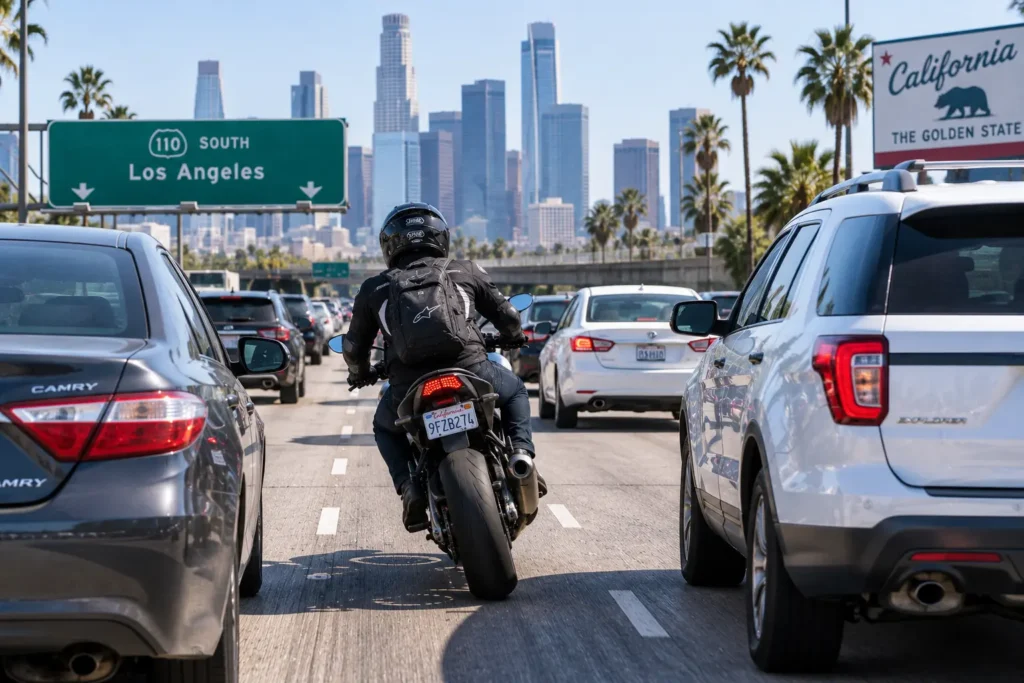
Lane splitting generally refers to a motorcyclist riding between lanes of moving traffic. Lane filtering typically involves moving past stopped or slow-moving vehicles under specified conditions. The rules vary by state:
- California: Lane splitting is permitted under applicable law. Riders should consider traffic conditions, speed, and safety.
- Nevada: Lane splitting between lanes of traffic is generally prohibited.
- Arizona: Limited lane filtering is permitted under specific statutory conditions, including certain circumstances involving stopped traffic, speed limits, and eligible roadways. Riders must meet all applicable requirements.
If a crash occurs during lane splitting or filtering, the legality of the maneuver, each driver’s actions, and other evidence may affect how fault is determined. Even when a maneuver is legal, that does not excuse unsafe riding or automatically eliminate liability for a collision.
Fault Rules Still Affect Your Recovery
Motorcycle accident claims are subject to the same general negligence principles that apply to other personal injury cases. The rules governing shared fault differ among Nevada, Arizona, and California.
- Nevada: Nevada follows a modified comparative negligence rule. A claimant generally cannot recover damages if their fault is greater than the combined fault of the parties against whom recovery is sought. If the claimant’s fault does not exceed that threshold, any recovery may be reduced in proportion to their share of fault.
- Arizona and California: Both states generally follow pure comparative negligence. An injured person may be able to recover damages even when partially or predominantly at fault, but the amount awarded is reduced according to their share of responsibility.
The outcome of a claim depends on the evidence, the applicable law, and how responsibility is determined. If helmet use or a rider’s conduct is disputed, it can be important to distinguish between what caused the collision and what caused or worsened a particular injury.
Insurance companies may question a motorcyclist’s actions or argue that the rider bears some responsibility for the crash. Photographs, police reports, witness statements, medical records, and other relevant evidence can help establish what happened and support a fair evaluation of the claim.
What to Do After a Motorcycle Crash
The steps you take after a motorcycle accident can help protect your health and preserve important evidence.
- Seek medical attention promptly. Some injuries, including internal injuries and traumatic brain injuries, may not be immediately obvious. If you have emergency symptoms, contact emergency services.
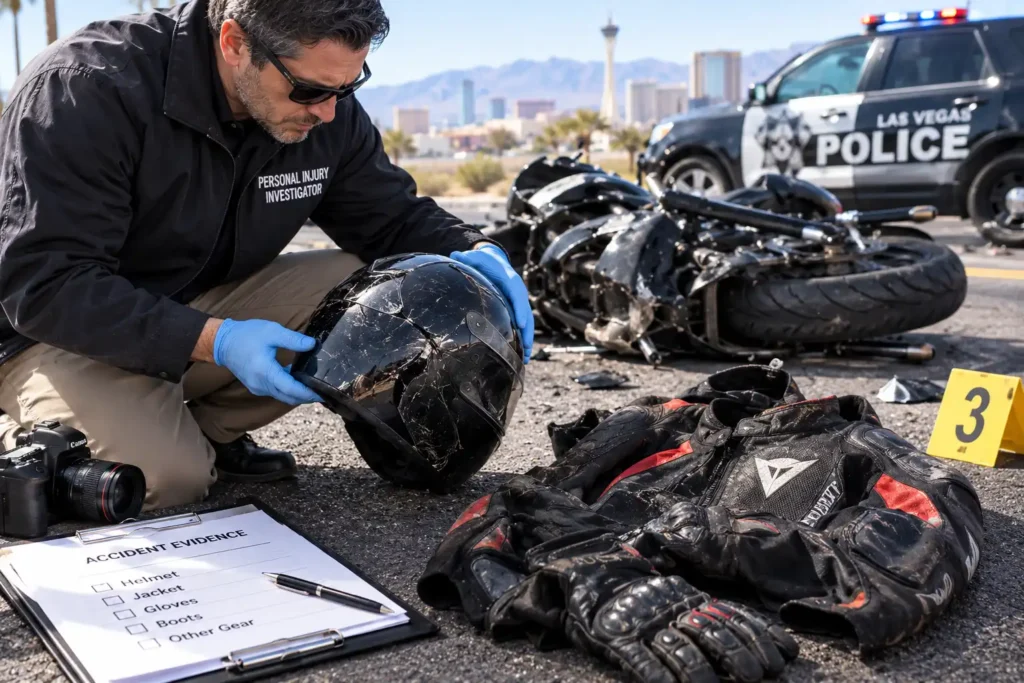
- Photograph the scene and damage. If it is safe to do so, photograph the accident scene, vehicle positions, your motorcycle, visible injuries, and other relevant details.
- Preserve your gear. Keep your helmet, protective clothing, and other damaged equipment. Avoid discarding or repairing these items unless necessary for safety. They may be relevant to an investigation or injury assessment.
- Record important information. Keep the contact details of drivers and witnesses, insurance information, and the police report number if available.
- Be careful when communicating with insurers. Provide accurate information, but consider getting legal guidance before giving a detailed recorded statement, signing a release, or accepting a settlement offer.
- Keep records of expenses and treatment. Medical records, receipts, treatment documentation, and evidence of lost income may help establish your damages.
- Consider speaking with an attorney. An attorney can review the law applicable to your accident, potential fault issues, and any relevant filing deadlines.
How Edvin Jones Injury Law Can Help
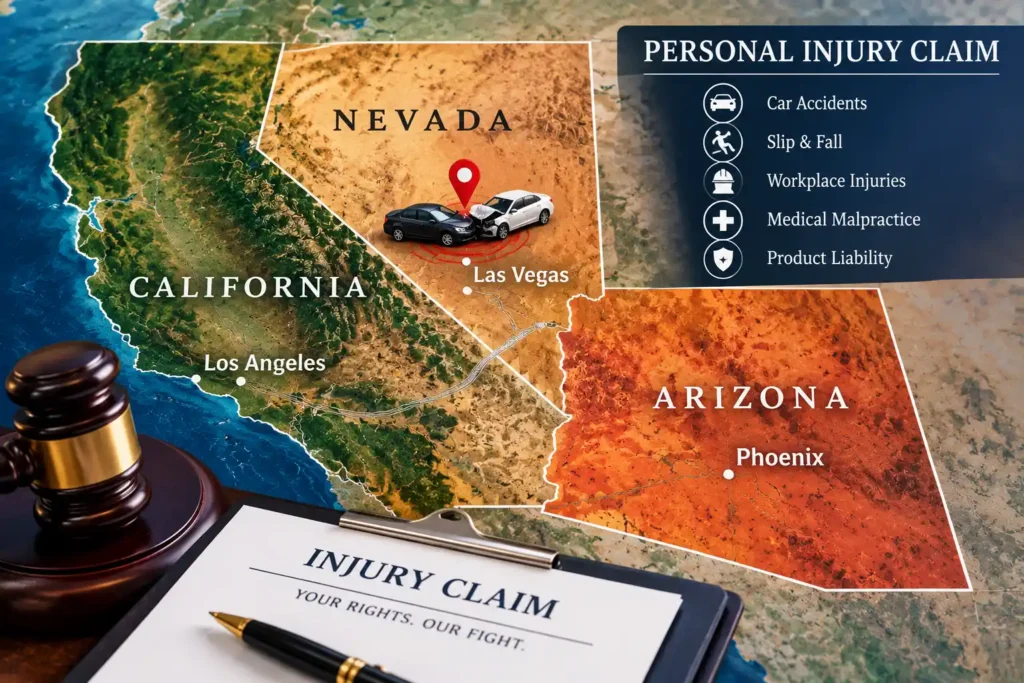
Edvin Jones Injury Law represents injured people in motorcycle accident cases across Nevada, Arizona, and California. Depending on the circumstances, reviewing a claim may involve examining accident evidence, helmet and lane-splitting laws, comparative fault, medical documentation, and communications with insurance companies.
If you have been injured in a motorcycle accident, you can request a free consultation to discuss your circumstances and potential legal options. No particular result is guaranteed, and every case depends on its facts and applicable law.
Contact Us
Edvin Jones Injury Law | Edvin Jones, Attorney at Law
Contact Edvin Jones Injury Law — Free Consultation
No Win, No Fee. We Speak English, Farsi, Turkish, Russian & Arabic.
Address:
Phone: 702-337-3430
Website: edvin.law
Instagram: edvinjonesinjurylaw | TikTok: edvin.law
Licensed in Nevada | Arizona | California
Disclaimer: This article is for informational purposes only and does not constitute legal advice. Reading this article does not create an attorney-client relationship.
Frequently Asked Questions (FAQ)
1. Are motorcycle helmets required in Nevada?
Yes. Nevada generally requires motorcycle riders and passengers to wear compliant helmets regardless of age.
2. Can adults ride motorcycles without helmets in Arizona?
Generally, yes. Arizona’s helmet requirement applies to riders and passengers under 18. Other legal requirements may still apply, and not wearing a helmet may become relevant when evaluating certain injuries.
3. Is lane splitting legal in California?
Yes. Lane splitting is permitted under California law, but riders must still operate safely and comply with applicable traffic laws. Legal permission does not make every maneuver between vehicles safe or lawful.
4. Is lane splitting or filtering allowed in Nevada and Arizona?
Lane splitting is generally prohibited in Nevada. Arizona permits limited lane filtering when the specific statutory requirements are met.
5. Will I lose my right to compensation if I was not wearing a helmet?
Not necessarily. The effect depends on the applicable law, the type of injury, the circumstances of the crash, and whether the lack of a helmet contributed to the injury. Not wearing a helmet does not automatically eliminate a claim.
6. Can I recover compensation if I was partly at fault for the motorcycle accident?
Possibly. Nevada uses a modified comparative negligence rule, while Arizona and California generally follow pure comparative negligence. Your potential recovery depends on the applicable law, the evidence, and the allocation of fault.
7. What evidence should I preserve after a motorcycle accident?
When possible, preserve photographs, witness information, the police report, medical records, expense receipts, and damaged equipment such as your helmet. Prioritize your safety and medical care before collecting evidence.
8. How can I speak with a motorcycle accident attorney?
Contact Edvin Jones Injury Law at 702-337-3430 or visit https://edvin.law to request a free consultation. If the firm accepts your case, the fee arrangement and responsibility for costs will be explained in a written agreement.